

BANK TREASURERS SAVE OUR HOMES
As they prepare to close their books for Q3 2026, bank executives remain confident they will easily meet their earnings projections for the quarter and for the rest of the year. With commercial and industrial (C&I) loans growing at the fastest pace since 2022, they expect loan growth to continue to surprise to the upside as broad demand for credit persists. While they acknowledge that loan growth puts upward pressure on funding costs and that competition for deposits is intensifying, they are encouraged by what they see as a battle-hardened, healthy economy able to withstand the effects of higher interest rates and ongoing macro-political uncertainty.
They are cheered by the relaxed capital standards proposed by bank supervisors last March, including lowering the minimum Community Bank Leverage Ratio from 9% to 8%, scaling back capital charges for low-loan-to-value (LTV) residential whole loans, and reducing capital surcharges. They believe this will free up capital for deployment in the loan market. Thanks to the Housing Act Congress passed this year and the Federal Deposit Insurance Corporation (FDIC) interim final rule published last month, banks can increase their funding from the reciprocal deposit network by a multiple-fold amount, though whether they will need as much funding is an open question given their capacity to borrow from the Federal Home Loan Banks (FHLB). Reciprocal deposits totaled $439 billion, or 2.1% of total deposits, which amounted to $21 trillion at the end of Q2 2026, and many banks operate below their existing capacity.
Their funding story is another bright spot, with their cost of funds and cost of deposits at their lowest levels since the Fed ended its last hiking cycle in July 2023 (see this month’s chart deck). Nevertheless, they know that a rate-hiking cycle will add to funding pressures. With one 25-basis-point hike behind it, bank treasurers are looking to the next Federal Open Market Committee (FOMC) meeting at the end of October for another 25-basis-point hike. The CME’s FedWatch Monitor puts the odds of a hike next month at 70%, up from unlikely a month ago, following Chairman Warsh’s hawkish comments at Jackson Hole and his press conference earlier this month after the FOMC meeting.
Since Jackson Hole, the yield on the 10-year Treasury has climbed 50-60 basis points to near 5.2%, while 30-year residential mortgage rates have topped 7% for the first time since 2023. Although the 2s-10s curve flattened considerably this year as the 2-year sold off, bank treasurers cannot help but be pleased that the 3-month-5-year part of the yield curve has steepened. That spread flipped from a year ago, when it was inverted by 20-30 basis points, to plus 80 basis points today, a fundamental boon to profitable spread banking.
But they have reason to worry about the wave of de novo trust bank charters issued by the Office of the Comptroller of the Currency (OCC) over the past year, which will facilitate stablecoin issuance and generally compete with traditional banks for deposits. The FDIC’s approval of four new Industrial Loan Companies (ILCs) this year, with more applications pending that it intends to finish reviewing before year-end, could add to upward pressure on interest-bearing funding. Notably, bank treasurers are currently focused on growing noninterest-bearing deposits.
Instant payments, tokenization, and artificial intelligence (AI) together pose another potent threat to core deposits and low funding costs. Although still in its infancy, instant payments activity is growing, and financial institutions will need to hold more liquid assets to offset sudden cash outflows. Tokenized deposits remain, for many bank treasurers, a solution in search of a problem, but with AI, a deposit token could be programmed to find the highest rate and automatically move to another bank, undermining the concept of a core deposit and relationship banking. This sounds like science fiction, but reality is not too far away, as bank treasurers acknowledge and as data from the Fed’s FedNow service attests. Thus, bank executives are careful when speaking to equity analysts to emphasize the “relationship” value of their banking franchise.
System Open Market Account holdings of Agency Mortgage-Backed Securities (MBS) continued their slow decline, falling by $190 billion over the past twelve months to $1.9 trillion this month. The portfolio peaked at $2.7 trillion in 2022 and, at $1.9 trillion, remains $0.5 trillion higher than the Fed's MBS holdings before it launched Quantitative Easing in 2020. Almost three-quarters of its MBS book pays interest of 4% or less, compared with the universe of outstanding mortgage loans, where 49% of residential mortgage loans pay interest of 4% or less.
Low-rate COVID-era mortgage loans are anchoring bank net interest income (NII) and net interest margins (NIM). The prospect of a higher-rate environment tells bank treasurers that the homeowners behind these loans won't do them any favors by prepaying anytime soon. As a result, their portfolios have extended beyond what they modeled at origination. Even if interest rates were not a factor in a homeowner’s prepayment decision, the business is changing from the lender’s perspective. The old rule of thumb that the typical owner sells and moves to a new home every seven years is obsolete. People buy homes later and never buy a second house; the cost of a new home persuades many to remodel their old homes rather than move; and remote work arrangements at some employers have reduced the likelihood that the typical homeowner puts their home on the market. This month’s chart deck includes the New York Fed’s survey, which shows that the share of homeowners who expect to move in the next year or three is at a multi-year low.
A segment of a bank’s mortgage portfolio remains 'locked in.’ These homeowners might want to upsize, downsize, or move, but refinancing costs at current rates deter them. If banks could persuade these homeowners to sell their homes, pay off their low-interest mortgages, and obtain new mortgages at a compromise rate below market rates to buy a new home, they could boost yields without affecting their balance sheets. Yet banks have not addressed this addressable market to date, blaming compliance red tape and the general inertia against new ideas.

The Bank Treasury Newsletter

Dear Bank Treasury Subscribers,
Look, we are sorry to rant, but the President is completely out of control. It is not about politics. Say what you want about Canadians; you don't go around renaming Lake Ontario Lake America. That is ridiculous. Lake Ontario cannot be called Lake America. He is such an idiot.
Why? You know why. We all went to elementary school, right? We all sat through social studies class, where your teacher went over the map and covered the Great Lakes of North America. You remember their names? Right! In your sleep, most likely. Huron, Ontario, Michigan, Erie, and Superior.
And you remember them precisely in that order. Why? Because of HOMES. That is the acronym. HOMES is to the Great Lakes what Red, Orange, Yellow, Green, Blue, Indigo, and Violet (or the same order backward) are to the colors of the rainbow. Or, as your science teacher taught you, just remember ROYGBIV or VIBGYOR.
And don’t laugh. Indigo comes from India. What if the President gets mad at India and decides we should eliminate Indigo from the rainbow? That would be evil, right? Can he do that? Who knows. But look what he did to the Gulf of Mexico: he renamed it the Gulf of America. Then again, who really uses GOM? And how could anyone be so moronic as to want school kids to remember the names of the Great Lakes as SHAME??? Like, who is smarter than a fifth grader?
What’s in a name? Even Juliet should know the answer. Everything. Renaming one of the Great Lakes is like removing the M from CAMELS, which bank supervisors seem intent on doing to the Management component of their supervisory rating for a depository’s Capital, Asset quality, Management, Earnings, Liquidity, and interest Sensitivity. Is that a hyperbolic description of their efforts? Perhaps, but did you catch the latest? The FDIC will allow banks rated CAMELS “3” to participate in reciprocal deposits while roughly quadrupling the cap on their exclusion as brokered deposits. Yeah, this is no problem. What is this world coming to?
Tell you what, if you were working as your own bank’s examiner, you wouldn't be able to meet the demands bank examiners seem to be under these days, learning to say nothing even when they see something. What does “materiality” even mean if the supervisors refuse to define it? Now, that’s a shame. By the way, you know what you get when you take the “M” out of CAMELS? You get CAELS, which sounds like a misspelling of the word for the cyclosporine-bearing leafy vegetable on sale at your local grocer.
What is a shame? Not just HOMES, but real homes. Homes are a shame for bank treasurers. They are a shame because a large share of them are underwater. And we are not just talking about the effects of climate change, which has made flooding a real threat and an insurance headache for homeowners living around the HOMES. No, we are talking about underwater mortgages.
Remember when an underwater mortgage meant the borrower was upside down, owing more on the mortgage than the house was worth? Remember Jingle Mail, when an underwater borrower facing financial ruin mailed in their keys one day? Remember HAMP, the Home Affordable Mortgage Program that expired a decade ago and was designed to help homeowners reduce their mortgage expense? Well, today, bank treasurers are the ones who are underwater, and they need their own HAMP, where they could somehow get out of the mortgages on their books.

Home Mortgage Shame
Today, the real shame is the stock of underwater fixed-income residential mortgage loans on the books of the nation’s banks, still paying interest well below current rates (Figure 1) and dragging down NIMs and NIIs. The FDIC’s latest quarterly report shows the book yield on 1-4 family mortgages at 4.8%, more than 200 basis points below the rate for a new mortgage. That is a crying shame, and the worst part for bank treasurers is that these mortgages are like those rent-controlled apartments you read about in New York City, the ones where tenants pay the same rent they did when they moved in decades ago, maybe as far back as when the Dodgers baseball team was in Brooklyn. They get their kids to live with them so that after they die, the kids can keep paying the same rent.
Homeowners with low-coupon mortgage loans are essentially “locked in.” A new homebuyer eyeing a 7% mortgage rate might wish they had this problem, but it's misery all around. Being locked in doesn’t feel good for the borrower or their bank. When you are locked in, you are forced to pass up that dream job that requires relocation, hold off on buying a new house with more bathrooms, better closet space, and maybe a larger dining room, or even forgo downsizing to move closer to your adult kids.
And the homeowner who cannot move is not the only one who is miserable. Locked in is bad for everyone, as Atlanta Fed research points out--a lose-lose-lose. It hurts household mobility, undermines the labor market, and kills home sales, rental markets, and commercial markets. All of which hurts cities and causes urban decay.
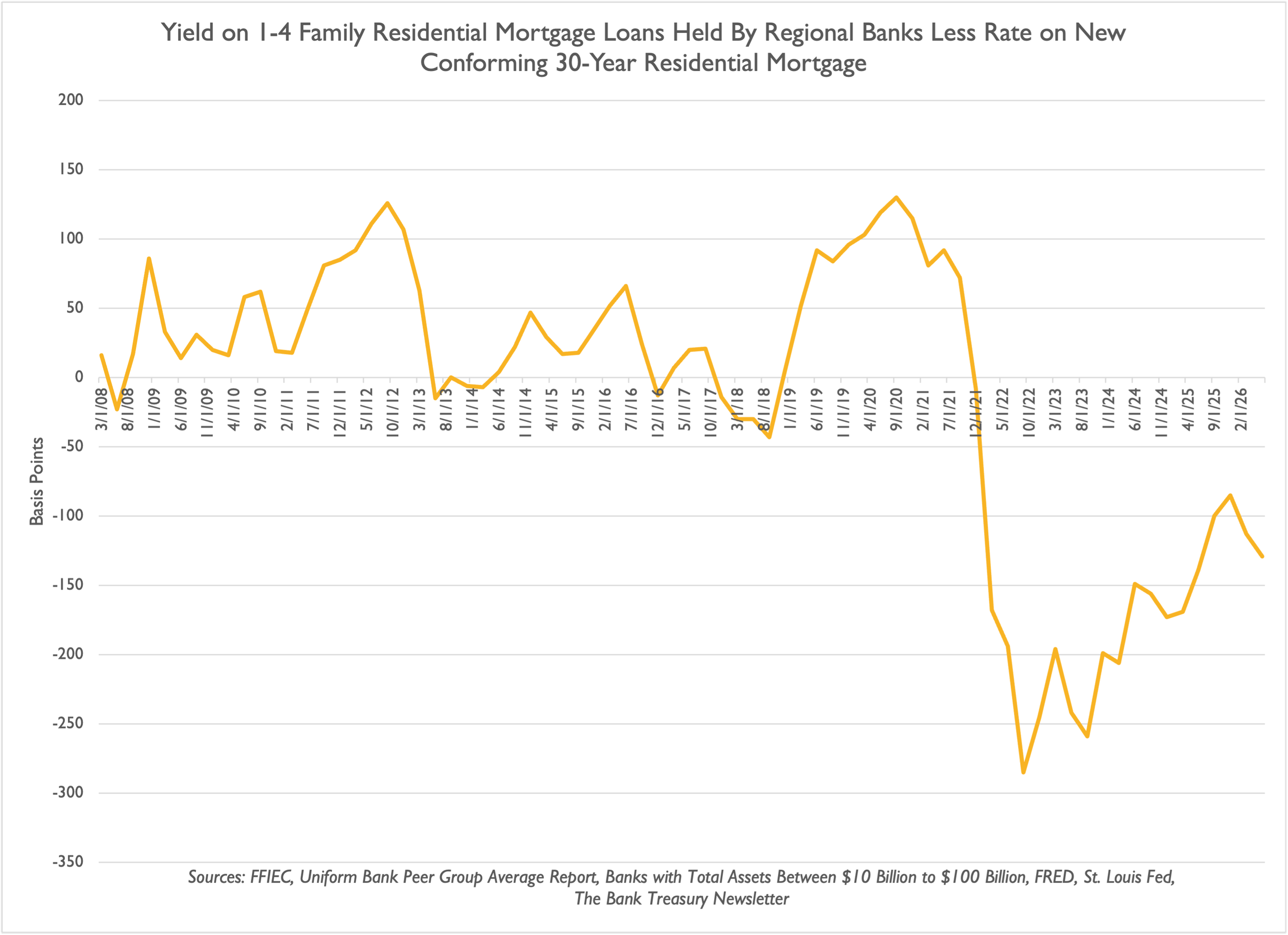
Figure 1: Yield on 1-4 Family Residential Mortgage Loans Held By Regional Banks Less Rate on New Conforming 30-Year Residential Mortgage
But as bank treasurers know well, having to look at it every day, the 10-year Treasury yield, measured by the daily average of the constant maturity rate, has averaged less than 3% over the last 20 years. Even if you earned a reasonable 200-basis-point mortgage premium over the 10-year over that period (and the average spread over the last 20 years is tighter (Figure 2), it would have been next to impossible to originate a mortgage loan you would be proud to call your own today.
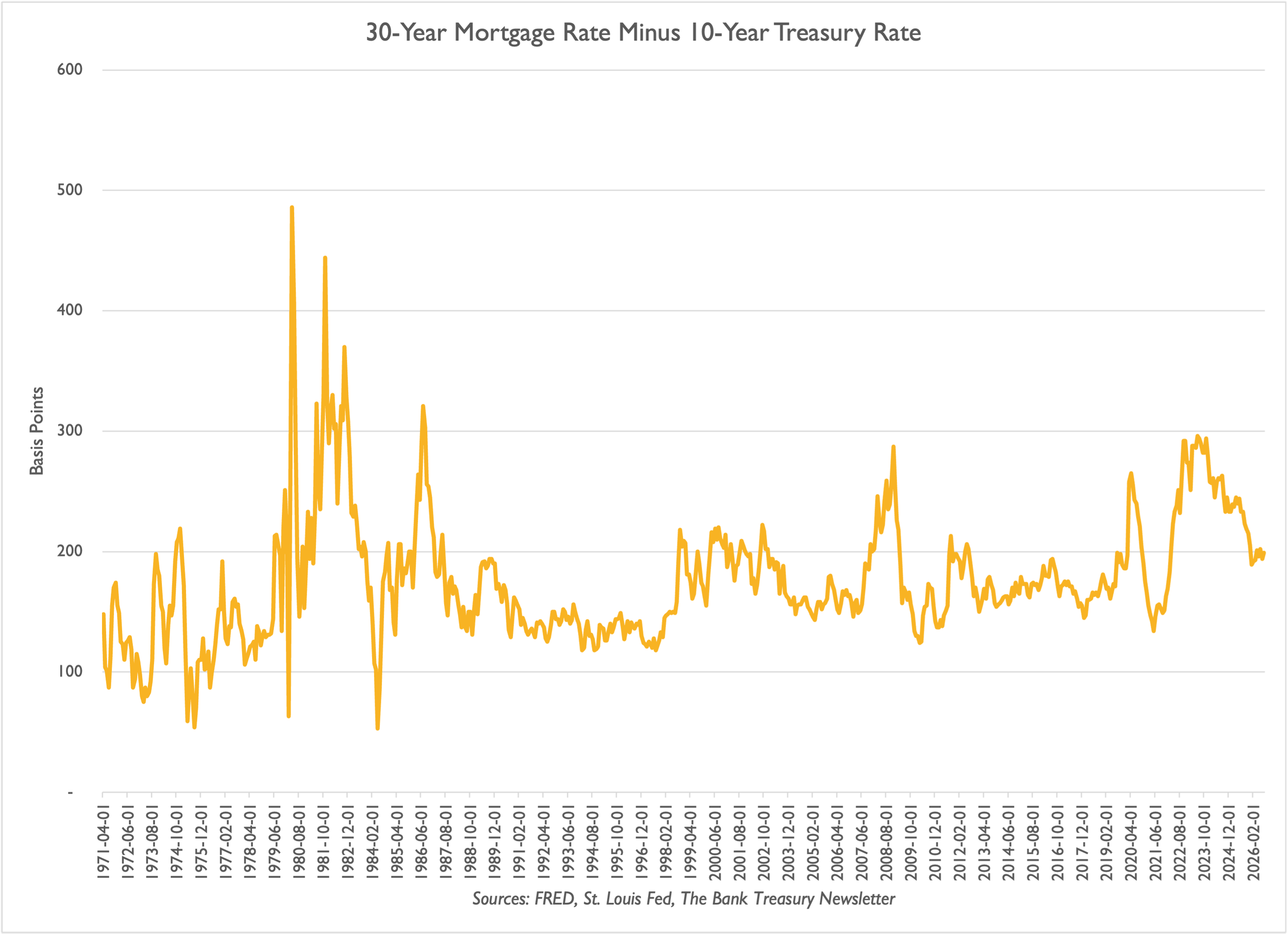
Figure 2: 30-Year Mortgage Rate Minus 10-Year Treasury Rate
For the past two decades, there has been no way to avoid the problem. You could have originated floating-rate loans or held cash while the overnight rate averaged 1.5%. But that would have been expensive. Who would do that? Today, floating-rate MBS and Commercial and Industrial (C&I) lending tied to SOFR are all the rage among bank treasurers, which makes sense given the Fed’s newfound hawkish stance. But back in 2020-2021, you had to be brave to buy floaters, and business loan demand was low.
Sitting in cash and giving up yield in hopes that markets would turn your way has never been a good career move for bank treasurers. You take what you can in the bank treasury business, and seasoned treasurers know their job is ultimately to supplement income from the lending and deposit departments when they come up short or need a gain to cover a loss. Bank treasurers need to earn a spread, and the C-suite and the board don't want excuses about the market and risk-return. (Unless the risk you take goes bad, and then it's the bank treasurer’s fault.)
Low-yielding mortgage loans are killing them. Bank treasurers look at their morning reports and want to be sick. 20% of outstanding home mortgage loans still pay less than 3%. When you include loans paying between 3% and 4%, more than half of outstanding mortgage loans are 300 basis points underwater relative to the going rate.

The news is not all bad. Underwater mortgage loans are rolling off — four years ago, 25% of home mortgages had an original issue rate of 3% or less. Yields on 1-4 family mortgage loans are creeping higher. A year ago, the FDIC reported that banks earned 4.7%, and two years ago the reported yield was 4.5%. The numbers are definitely improving. But some of our bank treasury subscribers are starting to worry they will retire before the rest finally pays off, leaving a stain on their careers dedicated to buying low and selling high. Bank treasurers are locked in and want out.
It’s a shame. You can try to grow out of the problem by originating new mortgage loans. Well, good luck with that, given the higher-for-longer rate outlook! Mortgage applications continued to decline this year. Who really wants to lock in a 30-year mortgage at 7-plus percent?
The only good news on the home mortgage front is that higher rates benefit investors in mortgage servicing rights (MSR) assets, which, unfortunately, remain unpopular on bank balance sheets. Why? Because they are intangible and regulatory-capital intensive, even under proposed capital rules that eliminate the Tier 1 capital cap but retain the 250% risk weight. Trade organizations lobbied the Fed to cut the risk weight to 100%, but bank supervisors are unlikely to go that far. The memory of Countrywide Bank’s collapse and its investment in subprime MSRs still haunts bank treasurers who understand what can turn a good investment into a nightmare. Only 10% of commercial banks report a material investment in the asset on their balance sheets, and MSRs equaled 15 basis points of total assets for the industry.
But fair values are up as the bond market leans into a higher-for-longer rate environment and mortgage loans extend. Call reports indicate MSRs were 105% of book value at the end of Q2 2026. The risk now is a recession, in which rates fall while default rates rise, a worrying scenario for banks holding these assets, as the Fed reminded bank treasurers in recent research that it could unfold easily.


Say Nothing Useful
In any case, if bank treasurers were hoping Kevin Warsh would offer insights into his thinking on inflation when he spoke to the press after the meeting, they were in for a disappointment. As far as he was concerned, the committee issued a statement, and that was all the public was going to get. It was that simple. There was nothing more to say, and nothing worth wasting time on, since he said nothing he had not said before. But he was glad to take reporters’ questions and answer them with reasonably-sounding but ultimately frustrating nonanswers.
Sure, he reviews the data, but he won't say whether he favors one metric over another for tracking inflation. Maybe his favorite metric even changes. He has task forces examining how the Fed conducts monetary policy, but one thing is certain: he does not believe in spoon-feeding information to Mister Market. Mister Market will need to do his job.
If Mister Market is unhappy with interest rates and wants them higher, he can go right ahead and raise them himself. He does not need the Fed to help (ignoring the fact that the Fed only controls the overnight rate). Go ahead and have a tantrum, Mister Market, if you want, he said, politely but firmly. The chairman wouldn't come right out and say that Mister Market was doing his work for him, but he kinda was.
Who knows? The chairman said he might even reduce the number of meetings going forward. There is no rule that requires the FOMC to hold eight meetings a year. Mister Market will need to be more self-reliant and use his brain. Thinking is a virtue that is sorely lacking, and the chairman wants to change that, as difficult as that may be.
Oh, he is all about transparency, and we should thank his idol, Alan Greenspan, for instituting the practice of issuing a statement to the public immediately after FOMC meetings. Otherwise, maybe he would be thinking of cutting them out. The FOMC used to release that 90 days after the meeting. In Volcker’s day and before, economists needed to divine the Fed’s monetary policy from the equivalent of tea leaves, parsing changes in line items on the Fed’s balance sheet. Veteran Fed watchers, the market soothsayers of the day, were well paid to divine the Fed’s unspoken messages.
But he voted the way he voted because that’s how he voted. He was not going to get into a whole discussion about economic trends, the Personal Consumption Expenditure (PCE) Index, trimmed and untrimmed, CPI, PPI- who cares! He and his fellow FOMC look at a lot of stuff, and sometimes they look at some things, and sometimes they look at other things. Got it? Oh, and no, he is not going to worry about what the market thinks of his vote. He voted the way he voted. Deal with it.
Nothing should come as a surprise, as the chairman said.
“Surprise is not the objective function. Surprise is not what we’re solving for.”
But if Mister Market expects to be told the Fed’s reaction function to economic developments, he needs to understand that he is a partner in the decision-making process. It is a two-way street. But what about inflation, which has not returned to the 2% target for 63 months? Weren’t you the guy, a reporter asked, who told Senators at your confirmation hearing?
“Inflation is a choice, and the Fed must take responsibility for it.”
For all the tough talk about inflation and all the hope and hype, the man who said, on his swearing-in as Fed chair last June,
“Like Alan, I intend to fill the role of chairman with energy and purpose, just the way Chairman Greenspan did, faithful to the mission and the very best traditions of the Fed,”
After all he had said, that man told a roomful of reporters, after almost two months on the job, that monetary policy does not need to change right now. Can’t you almost hear the late Senator Lloyd Bentson telling Dan Quayle at the vice-presidential debate in 1992 that he was no Jack Kennedy? To paraphrase,Home Economics
It is a shame that home lending is no longer a core product focus for bank loan departments. It should be a core product relationship, like George Bailey’s Building and Loan for a bank’s consumer customers, where my deposit goes into your mortgage and yours into mine, while my banker facilitates the intermediation for a reasonable profit. Instead, recent bank mortgage lending has left a bad taste in bank treasurers’ mouths because it never works out in their favor.
You can see their feelings about the business in the numbers. The banking industry today holds more than $2.4 trillion in residential, closed-end mortgage loans, about twice as much as it held before the GFC. Meanwhile, it tripled its total outstanding loans, ceding much of the new mortgage-lending business to fintechs, and its share of total loans fell from 25% to 17%.
Low interest rates have not made the business any easier, especially when competing with nonbank fintechs that use newer, more efficient technology to underwrite consumer mortgage loans. In a higher-rate environment, these fintechs lose some of their cost advantage, so banks could return to the business. Easier capital requirements, such as those bank regulators proposed earlier this yearto factor loan-to-value into the risk-weighting calculation for mortgage loans, might help shift the pendulum back.
But it is hard for bank treasurers to sell free options in any rate environment, and residential mortgage loans in the U.S. are the epitome of free optionality. Unlike Canadian home mortgages, or, frankly, mortgage loans sold by banks in any other major economy in the world, the U.S. mortgage borrower has the unique right to pay off their mortgage for any reason at any time for the life of the mortgage. As far as options go, this is as American as apple pie and as American as an American option. Bank treasurers who buy fixed-rate mortgage loans and fixed-rate mortgage-backed securities are short an interest rate option.

And they know that shorting interest rate options only makes money when interest rates and market volatility are steady, and, well, that is not exactly the interest rate picture these days, is it? Bank treasurers cannot wait to see the back of the business, as the president and CEO of a Midwest-based regional bank laid out the bank’s strategy to expand its NIM to analysts this month at an industry conference.
“I do expect margin expansion…it is on several fronts, but on a very basic level, we continue to run off low-yielding Resi, and that has been a strategy…We've gone from -- at our peak, 36% of our balance sheet was residential real estate. Today it's 18%. So the balance sheet mix is real. We'll continue to have the -- we'll do residential loans, but the portfolio will be a runoff portfolio…and we'll put on higher-margin commercial business that's supported by deposits.”
Every bank is busy remixing its strategy to boost NIMs, as the CFO of a regional bank on the West Coast told analysts.
“We've signaled we'll achieve that number and likely surpass it, and so we feel good about that. The first part of that is…the continued remixing of our loan portfolio. That book is sitting at about 4.14% coupon today. As those loans reprice, that's a powerful factor for us. We're seeing, as I mentioned earlier, some of that reprice and stay on the balance sheet; some of that prepay and go off our balance sheet, go elsewhere.”
The president and CEO of a regional bank in New England was down on residential loans and up on C&I loans.
“We expect that the residential portfolio will be flat to down over the next several years. We see opportunity in consumer home equity. But the primary growth driver will be…around C&I; we feel good about the outlook there, and those pipelines remain very strong. “
Why wouldn’t bank treasurers gravitate toward C&I loans these days? The book yield on bank C&I loan portfolios in H1 2026 is 150 to 200 basis points higher than that on their mortgage loan books. As the CFO at a large regional bank in the Southeast said,
“Mortgage has just been tougher given where rates are. So that's, kind of, been depressed from our initial expectations given where the 10-year is and the impact on overall mortgage growth.”
But banks are still supporting housing, just not necessarily through traditional home loans. Multi-family mortgage lending offers banks better terms, with no free options and a fixed term that eliminates extension risk. In markets like New England, there is not enough space for more homes, which has been another factor limiting home sales and homeowner mobility. Lending on multi-family homes is the future for banks, as the CFO at a regional bank in the Northeast explained.
“Our largest commercial real estate portfolio is multifamily. And there's such a chronic housing shortage in New England that there will always be these core multifamily projects going on that we'll be financing.”
Now, even if they aren’t holding as many residential whole loans on their balance sheets as they used to, bank treasurers are still buying Agency MBS. According to Fed H.8 data, Agency MBS accounted for 57% of bank investment portfolios. Mortgages pay higher nominal yields than bullet bonds, which was a compelling reason bank treasurers bought them in 2020 and 2021, when the average yield on the 10-year Treasury was under 1%. Unfortunately, in hindsight, the mortgage premium they earned proved insufficient to cover the option risk of owning them in 2022 and 2023, a lesson the markets drove home and still remind bank treasurers of every day they spend funding underwater, earning assets and covering Accumulated Other Comprehensive Income in their capital accounts.

The economics of the business are tough; the pressure to sell conventional mortgages to Fannie and Freddie is compelling when you consider the capital required, the liquidity you tie up, the interest rate and credit risks, and the administrative costs of holding a residential whole loan on your balance sheet. Sure, you could hold the whole loan, capitalize the exposure using a 50% risk weight, and maybe adjust that weighting down to 25%-35% with a low loan-to-value if the regulatory capital standard bank supervisors finalize this year. But how much easier it would be, especially if the mortgage is with a non-relationship borrower, to just sell it to the Agencies? If bank treasurers really want to sell interest rate options, they could always buy back the exposure in a securitized asset with a 20% risk weight.
The economics of selling the loan to the Agencies are more compelling for large banks. If you are subject to stress testing, capital surcharges, and liquidity requirements, holding a typical $400,000 mortgage costs more than the return on investment is worth, especially when the borrower is a single-product customer who does not even bank with you. According to New York Fed research, large banks gravitated to jumbo mortgage loans after the GFC because those loans were typically held by private wealth customers with whom the bank had a portfolio relationship and could generate sufficient returns to support the product’s capital, liquidity, and administrative cost intensity.
If they can secure all that other business, mortgage lending makes sense, even if they have to access the capital markets and pay wholesale funding rates to support the loan. In fact, any type of lending only makes sense that way. The president and CEO of a regional bank based in the Southeast was not afraid to fund his new loan production with wholesale funding,
“Some are worried that the next loan that you generate will need to be wholesale funded. Well, I had our team run a normal loan through a wholesale-funded model to say what's the profitability of that standalone loan. Well, it's about a 15% return on capital. So if we're just doing a loan wholesale funded, not great returns, not horrible. So that just shows that if you do that loan, and even if it's wholesale funded, if you bring over a deposit relationship, if you bring over some level of ancillary fee, you're back above a 20% return on capital.”

A Different Business
The home mortgage business is changing; the old rule of thumb that people moved to a new house, on average, every seven years is no longer true. Remember how your parents used to drive their cars into the ground? That is the way it is going with houses now, and more people are dying in them.
It used to be this way: you lent to a young couple for a starter home. They left their deposits at your bank, then their IRAs and trust accounts. They traded up to a bigger home to accommodate their growing family, and you took their new mortgage; or they sold to move across the country for a job elsewhere; or they downsized or divorced. People bought and sold homes in the U.S. for many reasons unrelated to the Fed funds rate.
This story was beautiful because it meant that when interest rates rose and mortgage loans extended, bank treasurers could always count on an exogenous factor—a new job, death, divorce, or whatever—to get them out of the asset. Now, the best bank treasurers can hope for is that a retiree living in their home with one of these low-coupon mortgages, against all sage advice, randomly decides to raid their savings to pay off their homes, which apparently is a thing.
People are still selling their homes and moving, but less than they used to. Starter homes are too expensive, having gone through the roof, so to speak. The Case-Shiller U.S. National Home Price Index, for example, rose from 213 in January 2020 to 332 last June. Other home price indices tell a similar story: home price gains during the pandemic have held and even continued to rise since then. The typical median-priced house costs over $400,000, and the FHFA’s size limit on conventional mortgage loanscontinues to rise as prices do. The Atlanta Fed’s housing affordability index is the lowest it has been in 20 years, and a prospective homeowner would need to earn at least $126,000 a year to qualify for a mortgage.
Couples who buy homes tend to do so later in life and are less likely to trade up. They may rent instead, which, given the numbers, makes more economic sense. They have fewer children. Remote work also reduces the likelihood that a homeowner will need to sell a house to relocate for work. According to the New York Fed’s Consumer Expectations survey, expectations of moving in the next 1-3 years are the lowest they have been since the survey began a decade ago. A phenomenon known as “gray divorce” affects homeowners over 50, but the cost of maintaining two residences sometimes keeps couples under the same roof. Moving just isn't as common anymore.
Home lending is not cheap. AI can only do so much to make the lending process economical. The move to tokenization may one day turn even a home into a digital representation that's as easy to lend against as an open book. But today, home lending involves many details and requires getting one's hands dirty.
Behind every 1-4 family mortgage loan that bank treasurers carry on their balance sheet is a home. A home is a primary residence, a family compound, and an ancestral home. Homes come with many details, not just the wainscoting on the walls and fancy paneling. A home has a specific location, location, location; it comes with a deed and a survey; it is defined by its property lines and subject to zoning laws. It creaks, clanks, smells, and has its own drafts, memories, mold, and leaky roofs. You also have to consider sewage pipes and septic tanks, as well as trees and tree roots. Homes are not just titles and insurance values. They take time to sell and to buy, to value and to assess.
For bank treasurers focused on generating economic value for their company’s shareholders, consumer home mortgage lending isn't for the faint-hearted, either. A long list of regulations governs consumer lending and can result in heavy fines if violated. You’ve got your Truth in Lending Act, the Real Estate Settlement Procedures Act, Ability-to-Repay and Qualified Mortgage rules, and Home Mortgage Disclosure Act requirements to consider. The rules are stacked against banks, and everyone sues everybody, as the chief executive and chairman of a bank told his shareholders in his 2019 annual letter.
"Reducing onerous and unnecessary origination and servicing requirements (there are 3,000 federal and state requirements today) and opening up the securitization markets for safe loans would dramatically improve the cost and availability of mortgages to consumers – particularly the young, the self-employed and those with prior defaults.”

Housing Numbers Tell A Good Story
But to set the record straight, the numbers show that more people are getting housed, even if the definition of a home may have changed. In 2010, as the banking system climbed out of the Global Financial Crisis, there were an estimated 132 million housing units, dwellings of one sort or another designated to house a single family under one roof. Houses could be detached or attached structures; they could be condos and co-ops, or any place other than a cardboard box on the street that someone called home, or maybe a motel room you stayed in long term because you could not find a rental or afford one. Today, the stock of homes meeting this description totals 150 million.
Over the past 16 years, while the housing stock increased by 18 million units, the U.S. population grew by 33 million to 342 million. So, just to do the arithmetic, in 2010 there was one place to call home for every 2.4 people, and now there is one home for every 2.3 people. Who says people are having a hard time finding a home? Not necessarily homes they can afford, but they can find homes on the market. But even 150 million units may be insufficient, as Fed Governor Barr noted in a speech this month at the Chicago Fed.
“It is challenging to arrive at a precise estimate of the housing shortage. But estimates put the U.S. housing supply shortfall at roughly 2 million to 5.5 million units, depending on the methodology used and accounting for regional differences. Against a U.S. housing stock of roughly 150 million units, these estimates imply a shortfall of approximately 1 percent to 4 percent of the total stock. While relatively small as a share of the nation's housing stock, the deficit can have an outsized effect on homeownership affordability because housing markets require a certain level of vacancy and available inventory to function efficiently.”
There is nothing more American than using a mortgage to buy your home, especially when the most you can afford is a down payment. And say what you want, nothing is more rock-solid than American homes, at least as far as mortgage lenders are concerned. If there are 150 million homes and the median price is $408,000, it is fair to say that the U.S. housing stock is worth more than $60 trillion. U.S. households have an unpaid principal balance on their homes totaling $12 trillion. Indeed, even with higher mortgage rates, household mortgage expense remains unchanged.
Unlike the financial crisis, people are not struggling. Bank executives nationwide are optimistic. As the chairman and CEO of a large regional bank on the East Coast noted,
“I think on the consumer side, clearly high-end folks are doing extremely well. They're benefiting from a high-value stock market and home values holding up nicely. But even as you go down into the lower spectrum, folks are managing okay. I think they've become adaptable and resilient, and kind of make trade-offs in how they're spending their money. But we don't see a lot of stress. We don't see delinquency roll rates ticking up or anything like that.”
The chairman and CEO of a global bank told analysts simply,
“The mortgage business is quiet.”
Indeed, as the CFO of a regional bank on the West Coast said about his bank’s major lending businesses,
“The strongest growth in the second quarter was in our single-family mortgage book, and that business has been sustained. Interestingly, although long rates have backed up, the American dream is alive and well. The desire for owning a home continues to be a driving force for many American households.”
And setting doubts aside, if there is anything more rock-solid than American homes, it is the economy, as the president and CEO of a regional bank in the Midwest said.
“People hear about global tensions, they see what's happening in the economy, they'll pause for a moment, and they'll look around and say, ‘Wait a second, everything seems okay. I think the economy is solid,’ and then they get back in the game.”
Funding Squeeze
Funding is the other side of the equation for low-yielding mortgage loans. Right now, the bank treasury funding story is a good one. The typical bank’s cost of interest-bearing funds is about 2%. If you include noninterest-bearing deposits, you shave 30-40 basis points from that number, meaning you can earn a spread even on a 3% 30-year mortgage loan. According to FDIC data, funding costs are at a multi-year low compared with levels after the Fed finished hiking rates in July 2023.
But that story is about to grow old as the Fed turns hawkish. At least that is what bank treasurers fear. They remember how quickly their funding costs rose the last time the Fed raised rates, from March 2022 to July 2023. During that period, the average cost of interest-bearing deposits rose from 16 basis points to more than 3.0%.
As the chairman and CEO of a Northeastern regional bank said,
“I think the backdrop for deposit costs right now has been the anticipation of a Fed rate hike, and some of your more price-sensitive customers at the bigger end, including corporates and higher-wealth clients, are anticipating that rates are going up and want to participate in that.”
It is amazing how quickly the rate picture changed, along with expectations for deposit pricing and increased competition. It was just six months ago that bank treasurers were factoring rate cuts into their budgets for the year, as the CFO at a bank based on the West Coast said,
“I would agree…on the deposit side, the tide shifted in Q2…If you go back six months, the expectation was that rates would continue to decline. That was what was…in our plan at the beginning of the year…And that's put pressure on funding costs across the…industry. We see it in our marginal funding costs. And I think what that's required is for us to be very surgical in terms of how we decide to price deposits.”
Just to be clear, deposit funding remains plentiful today, at least in the aggregate. Money market funds have long competed with bank deposits, especially when rates are rising, as deposit dollars seek higher yields outside the banking system. Without any change in rates, money market funds grew by $1 trillion from June 2025 through last month, reaching $8.5 trillion. Despite this record growth, money market funds did not erode bank deposit growth. Bank deposits grew by $1.2 trillion during the same period, to $21 trillion.
Here is the thing. Despite all the talk about deposit-funding stress, loans in the banking system total only $14 trillion, which is why banks today do not have a deposit-funding problem; they have a loan problem. They need more loans. The industry’s loan-to-deposit ratio of 72% is still 10 points below average, according to the Fed’s H.8 data, which go back to January 1972. But these are aggregate numbers; in some regions, banks have too many loans and not enough deposits, while in others, it is the reverse.
One of the interesting aspects of lending is that every dollar a bank lends, every new credit, automatically creates a deposit. As long as the borrower leaves the loan proceeds in their deposit account at the same bank, the bank does not have a funding problem. But if the borrower pays a homeowner for a house and the homeowner deposits the proceeds at another bank, the borrower’s bank might face a funding problem. That is why retail brokered deposit and reciprocal deposit networks exist. These networks are not just for bank treasurers to attract large deposit accounts beyond the FDIC $250,000 insurance limit. They also efficiently move funding where it is needed.
If they need funding, they can expand their use of the wholesale markets. Brokered CDs issued by banks have held steady at $1.2 trillion for the past year. Reciprocal deposits totaled nearly $0.5 trillion at the end of Q2 2026, and the new rules approved by the FDIC could allow them to increase that amount almost fourfold. Many banks do not even use their available reciprocal deposit capacity, so the FDIC's move may encourage institutions to draw on their lines. They also have capacity to increase their FHLB advance limits, as their borrowings totaled $0.6 trillion last June, well below levels during the 2023 regional crisis.
Even with greater borrowing capacity, an above-average supply of deposits relative to loans, and an efficient way to move money where it is needed, bank treasurers worry about competition. Now, with over 8,000 institutions combined, the sheer number of chartered banks and credit unions is shrinking daily. The FDIC reported that 90 institutions merged in the first half of the year, most with total assets under $1 billion, and that two banks failed. On the other side of the ledger, regulators approved 7 new bank charters. This lopsided trend between mergers and new charters has persisted since the financial crisis and explains why the number of institutions in the industry has rapidly shrunk.
But their concerns are not based on the number of banks and credit unions or on their demand for deposits. They wonder, for example, what the FDIC’s newfound willingness to accelerate the approval of new industrial loan charters (ILCs) means for deposit funding. Those charters used to take years to complete, and approvals had been under a de facto moratorium until now. ILCs cannot accept demand deposits, but they can raise interest-bearing deposits nationwide and afford to pay higher rates. State supervisors, mostly based in Utah (the national capital for ILC charters), supervise them.
In addition to ILCs, bank treasurers worry about the OCC’s recent spate of fintech charter approvals. The OCC has 26 charter applications pending and has committed to clearing the backlog within 120 days. Many of these institutions will be trust banks that allow fintechs to siphon deposits from banks to issue stablecoins.
Bank treasurers generally do not believe there is much of a market for stablecoins, but they know that the public’s ability to move money instantly intensifies competition for deposits and puts upward pressure on funding costs. It will definitely change the deposit business and, from their perspective, will not help deposit pricing, as the chairman and CEO of a large East Coast regional bank readily conceded.
“I think it's logical that deposit gathering changes. I think that more transparent discovery of rates is probably going to make deposits, particularly deposits where you're paying interest, more commodity-like. I don't know when that would happen, but that seems logical.”
Aside from the money-and-banking theory that loans create deposits, their optimism about this year's loan growth fuels their anxiety about deposit pricing and competition. The CFO at another West Coast regional bank saw it coming,
“Back in January, we told you that the forwards for CDs were already reflecting a more competitive deposit environment. They were already reflecting a shift higher in funding levels and an expectation that loan growth would be stronger in '26. It turns out those things all came together. And so we're not surprised at where we find ourselves now.”
Some of that lending was pulled into Q2 2026 in anticipation of this month's hike and may therefore be less of a factor in deposit costs for the rest of the year. However, the strong lending environment has surprised many bank executives. As the CFO of a large regional bank based in the Midwest admitted,
“I…expected coming into the year a little less loan demand than we've seen just because rates are not necessarily historically high, but they're certainly higher than people would have thought at the beginning of the year. That hasn't seemed to drive through the bank loan market. I think if we got three more hikes, you might start to see something slow, but we just haven't seen that yet.”
The chairman and CEO of a regional bank on the East Coast offered a nuanced view of loan growth on both spot and average bases.
“I think we're tracking to where we thought loan growth would be on a spot basis for the year. I think some of that accelerated a bit into the second quarter. So we're running a bit ahead on the average, or at the top end of the range, on the average loan basis.”
It is not all about data centers, either. Lending is broad-based. As the president and CEO of a Midwest regional bank told analysts, casinos and related businesses are among his bank’s fastest-growing areas, where people are spending more than they do on restaurants and museums.
“Gambling. The fastest-growing area we're seeing in spending is gambling. Upscaling, increasing their spending on travel and entertainment at the higher end. Not so much money on home improvement. Those are examples, but they reflect broader trends that we're seeing.”
Regulators are fueling loan growth, which is intensifying deposit pressures. By easing capital requirements, cutting the capital assessment for Category I global banks, and lowering the minimum Community Bank Leverage Ratio threshold from 9% to 8%, they have given banks more capital to deploy. Lending is the logical destination for that capital, as an interest-earning asset. If only bank treasurers could get out of their low-yielding mortgage loans that will not go away, they would have even more capital to invest in lending. But how?
A Problem and a Simple Solution
Bank treasurers still hold low-yielding, fixed-income mortgage loans on their balance sheets that are running off slowly. Payoffs may slow even further, depending on where the Fed takes interest rates this year. The funding picture is good, so these assets still earn some spread, even if it dilutes NIMs and drags on NIIs. But there is enough to worry about negative carry on them in the not-too-distant future.
Many homeowners who bought their homes or refinanced in 2020 and 2021, and some even those who bought more than a decade ago, want to move and buy a new home, but they are locked in. And as much as these homeowners are locked in, prospective homeowners are locked out. As Fed Governor Barr said, it is not just the price of homes, property taxes, insurance, and other expenses that make homes less affordable,
“Another recent factor that has made homeownership less affordable is high mortgage interest rates, as I mentioned earlier. Many families benefited from very low mortgage rates before 2022; these households are now less likely to move because of the higher rates they would face. This lock-in effect reduces both demand and supply and thus housing market dynamism. About half of all mortgages still carry rates of 4 percent or lower...In tight housing markets, the lock-in effect can raise home prices because the reduction in housing supply associated with fewer homeowners selling can outweigh the corresponding reduction in demand.”
But what if bank treasurers could approach homeowners with one of these 3% mortgage loans, offering to split the difference if the homeowner would sell their home immediately and accept the first bid, but not if they would need to finance a new home at 7%? What if they offered a 5% rate for a new mortgage, or a rate better than the 7% they would ordinarily pay? The only condition was that the homeowner sell their home, pay off their existing mortgage, and qualify for a new mortgage to buy a new home.
Think about that. Instead of living with them or selling your low-yielding residential whole loans at a loss, you could write new loans. The loans would be below market, so if you ultimately sold them, you would still incur a loss, but not as severe as if you had sold 3% mortgage loans. If your 3% mortgage loans make up 20% of your portfolio and you could convert some portion of those mortgages to 5% mortgage loans, that would be 200 basis points of additional yield you could pick up, accretive to NIM and NII.
True, this would take work. From conversations with bank treasurers, no one seems to have tried it—or at least no one has executed it. A bank would be offering a customer a below-market loan, so it would first need to satisfy compliance, governance, and consumer-protection requirements. Accountants might also need to determine whether the new mortgage is a refinancing or a loan modification under FASB Accounting Standards Update 2022-02. Still, they should be comfortable with the structure: the borrower sold the original home, moved out, and bought another one.
A 5% rate is better than 3% and a win any day of the week. At 5%, a mortgage loan has a shorter interest-rate duration than at 3% and more prepayment optionality, and that is a win-win for asset-liability management-minded bank treasurers. And what about keeping your customers happy and retaining the lending relationship? That’s a win for the loan department and a win-win-win! And how about a win-win-win for getting America back on the move and saving homes, if not HOMES? That is a win-win-win-win. Let’s get moving, America!

The Bank Treasury Newsletter is an independent publication that welcomes comments, suggestions, and constructive criticisms from our readers in lieu of payment. Please refer this letter to members of your staff or your peers who would benefit from receiving it, and if you haven’t yet, subscribe here.
Copyright 2026, The Bank Treasury Newsletter, All Rights Reserved.
Ethan M. Heisler, CFA
Editor-in-Chief
This Month’s Chart Deck
FDIC data show that net interest margins (NIMs) are at their highest since 2018, and bank executives are optimistic about further growth. However, to sustain strong performance, they need to address the low-yielding mortgage loans they originated during COVID. The Federal Housing Finance Agency (FHFA) reports that nearly half of mortgage loans carry interest rates below 4% (Slide 1). Thanks to low-cost deposits, even fixed-rate loans paying 300 basis points below the current mortgage rate still offer a 300-basis-point spread over deposit costs (Slide 2).
Americans are moving less often than in the past (Slide 3), largely because relocating is expensive. Home prices surged after COVID (Slide 4), and although the growth rate has slowed and homes stay on the market longer, homeowners still hold the upper hand with prospective buyers. This is partly because, despite having 150 million housing units, the supply remains insufficient to meet demand (Slide 5). Additionally, fewer homes are being listed because, unlike during the financial crisis, Americans can afford their mortgages and are not compelled to sell for financial reasons (Slide 6).
The industry’s cost of funding, including noninterest-bearing deposits, was 2.3% last quarter (Slide 7), the lowest it had been since 2022, and even as money market funds increased over the last year by $1 trillion, the banking industry is still growing deposits (Slide 8). Deposits at $21 trillion exceed total loans by $7 trillion. Banks with fewer deposits and more loans also have significant capacity to fund loans in the wholesale markets, thanks in part to the FDIC’s increase in the reciprocal deposit cap (Slide 9). Lending is a good problem to have, but bank treasurers worry that as loans grow, deposit costs will rise. Casinos are one of the fastest-growing loan segments in some markets (Slide 10), a sign of the consumer’s robust financial condition.
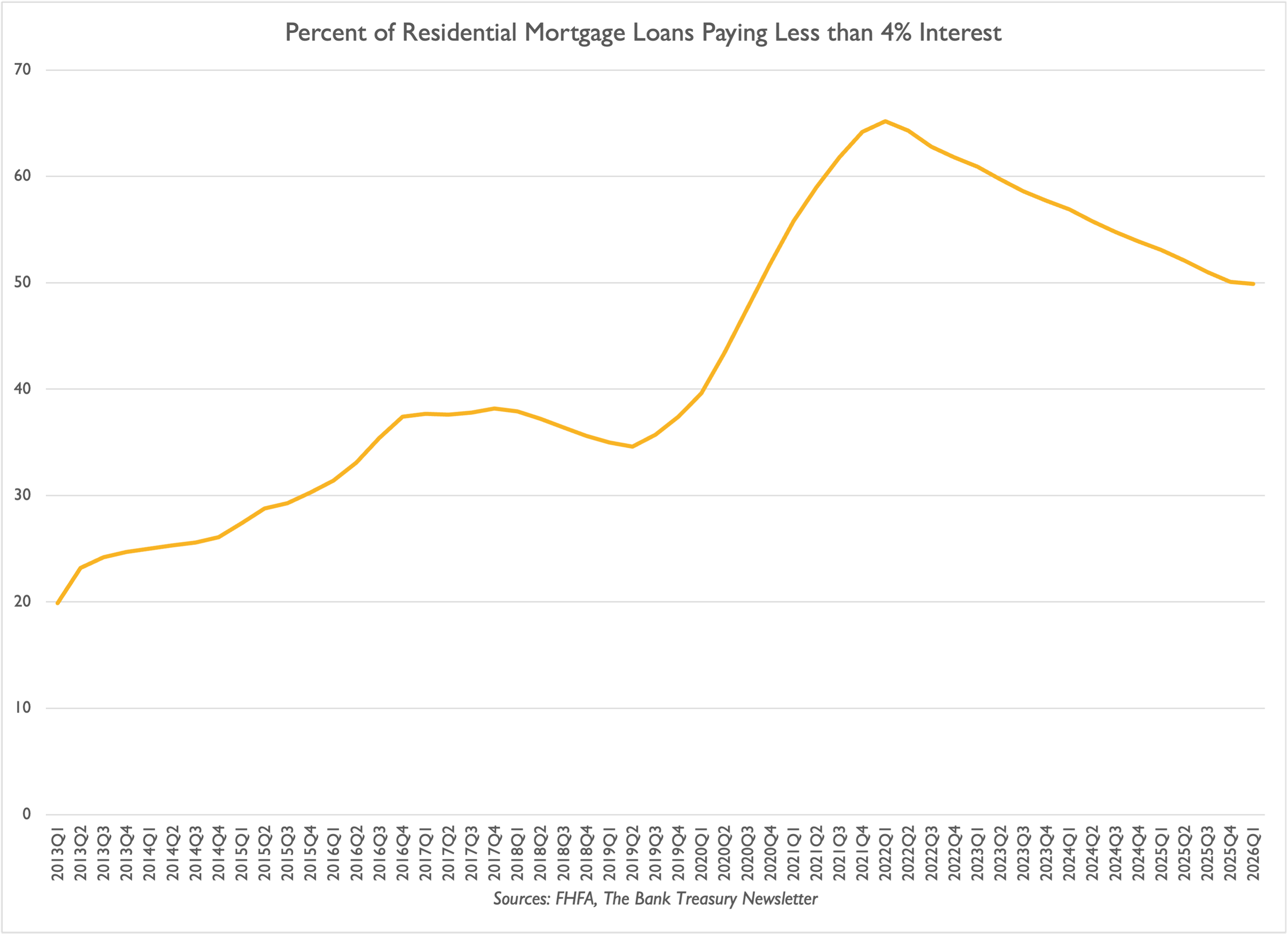
Low-Yielding Mortgages Weigh On Bank NIMs
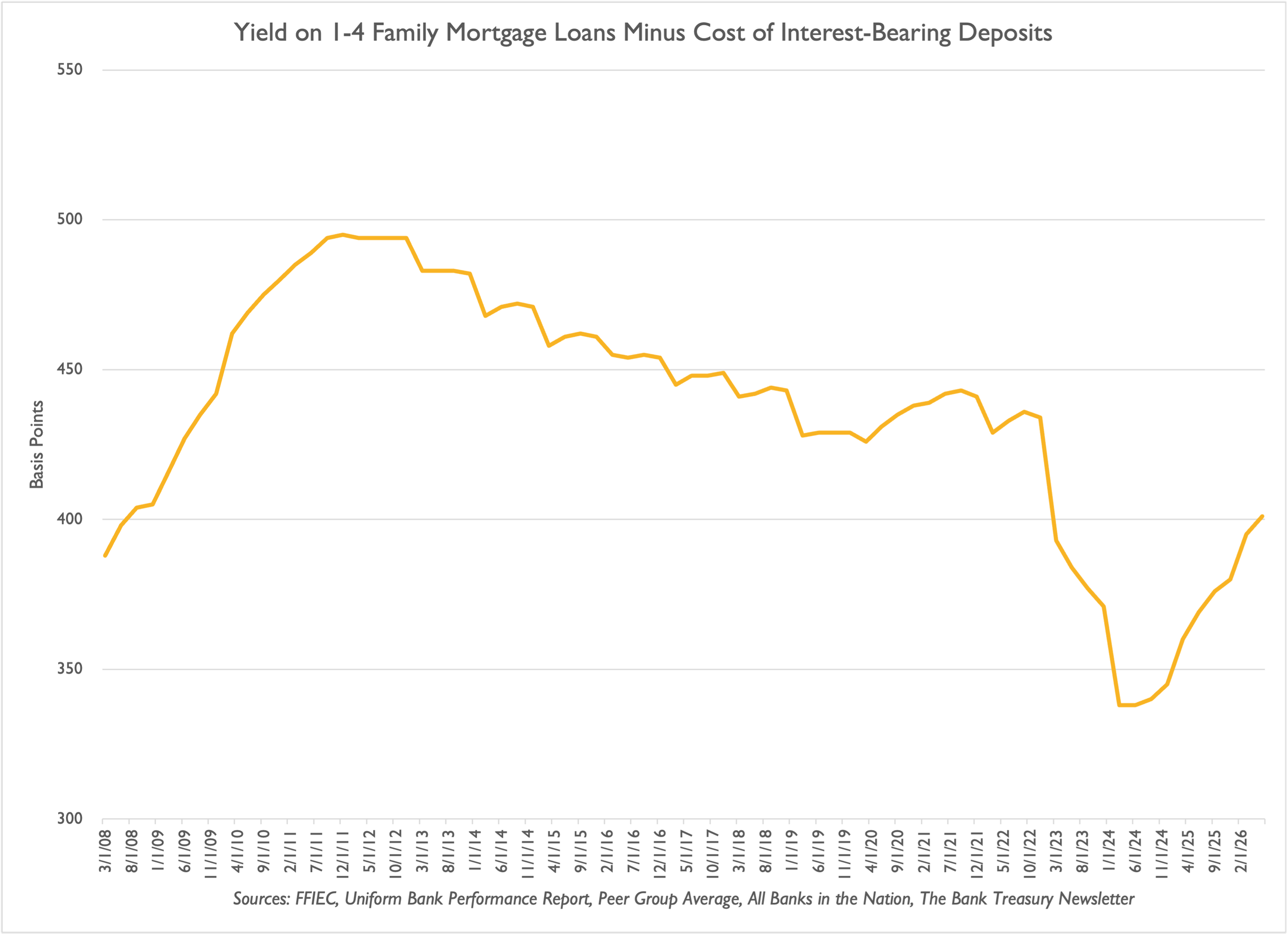
But Earn A Spread Over Their Low-Cost Deposits
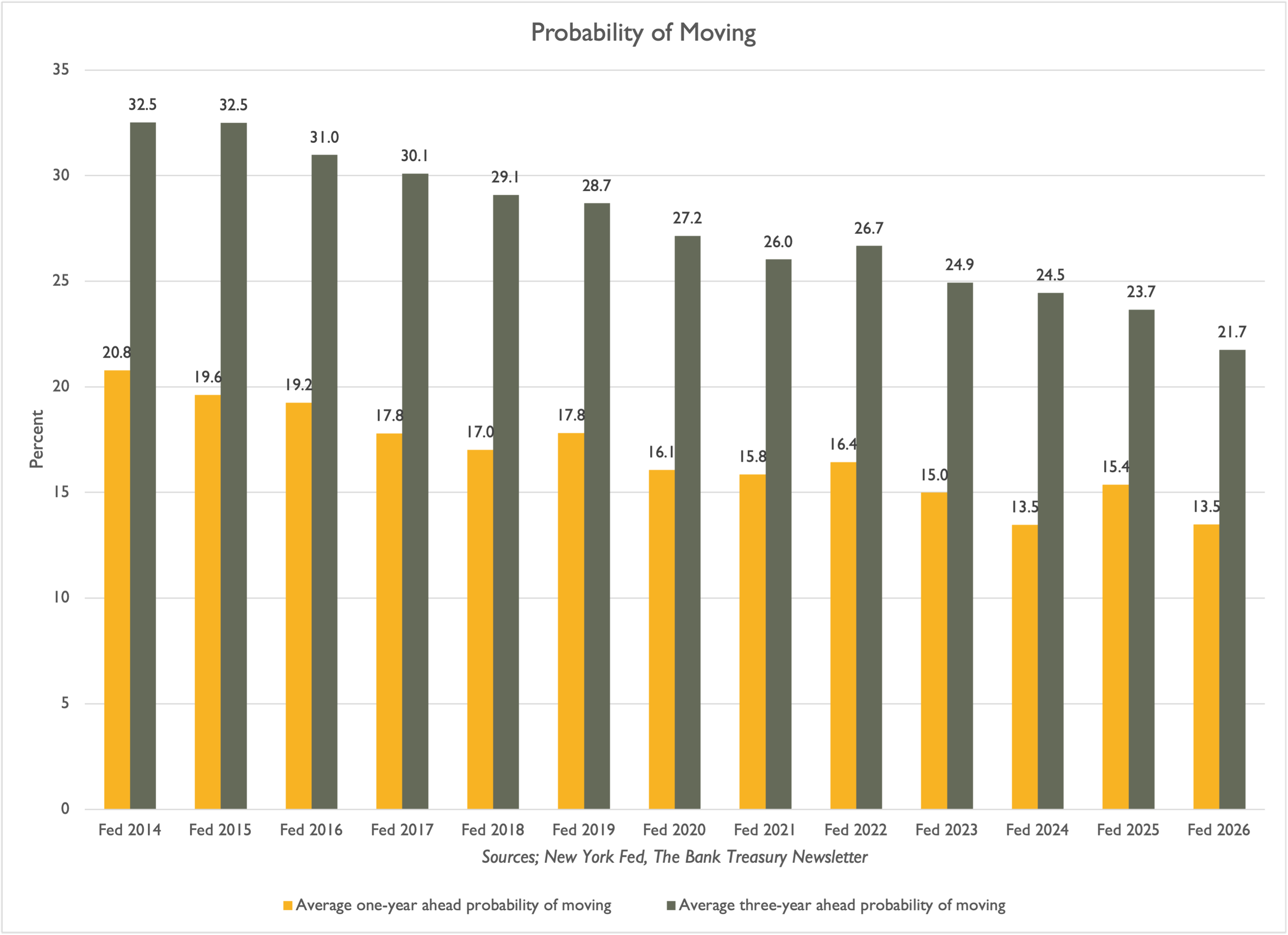
Homeowners Are Moving Less These Days
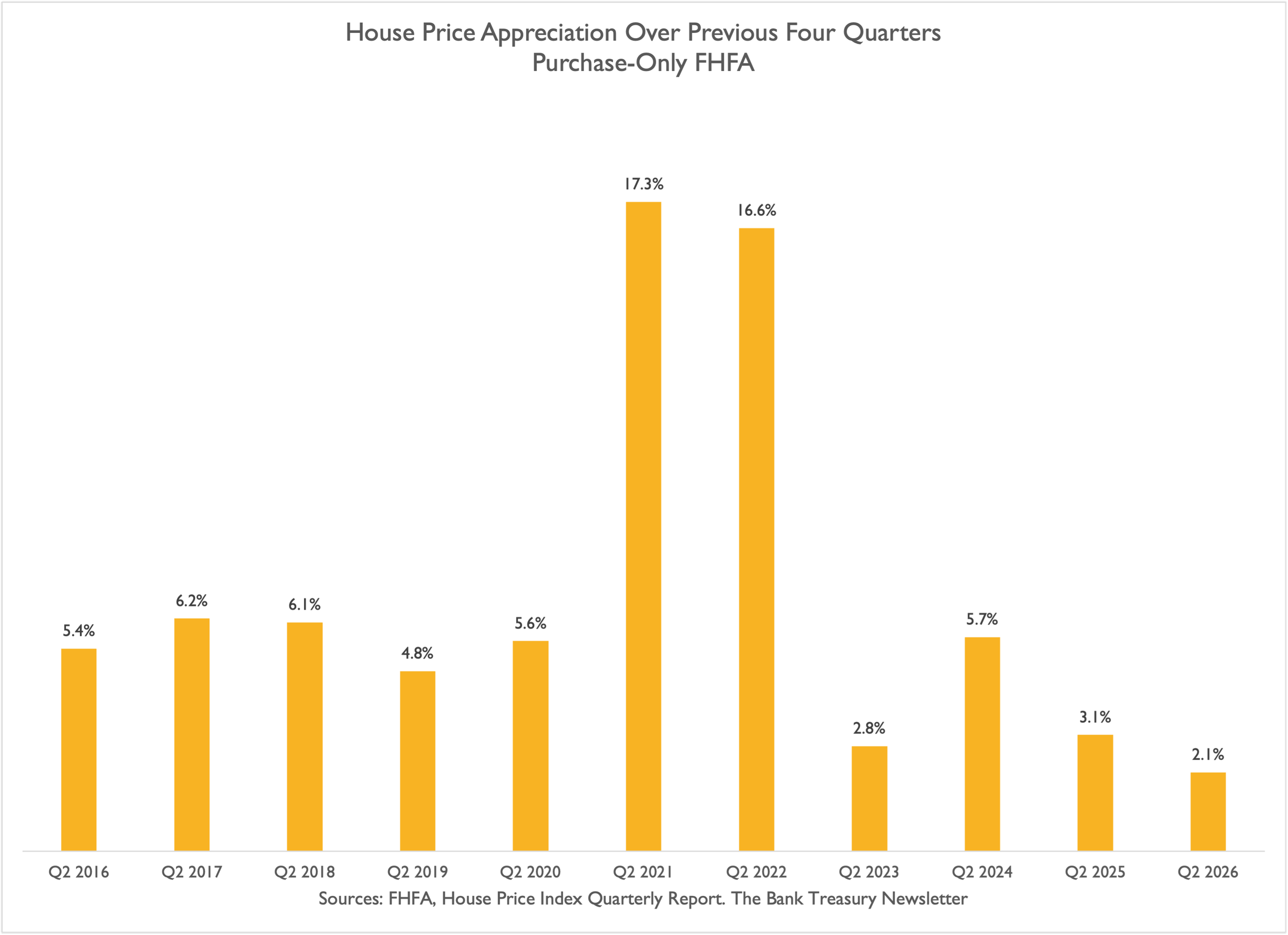
Home Prices Edged Higher Last Year
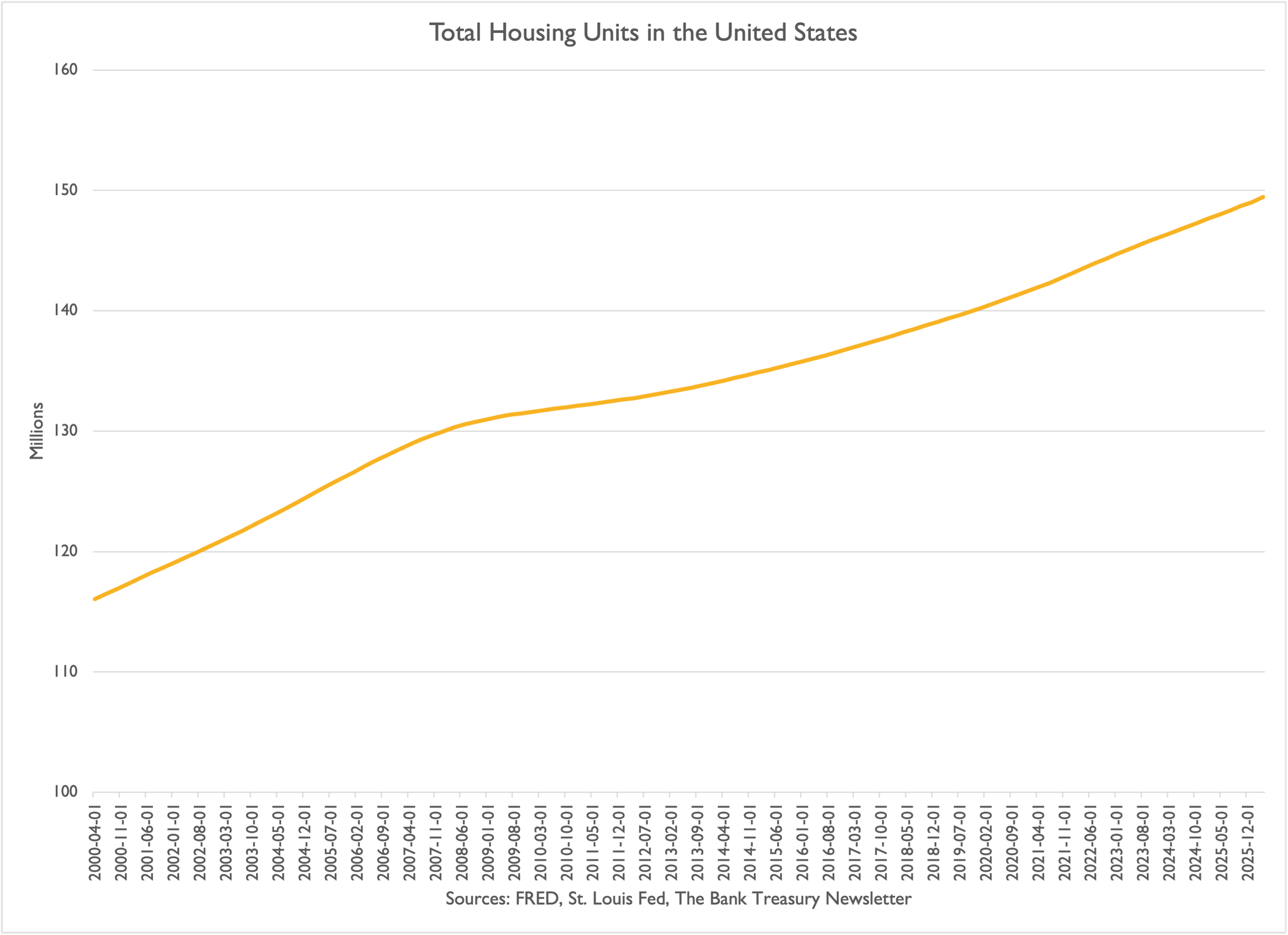
Even 150 Million Housing Units Is Insufficient
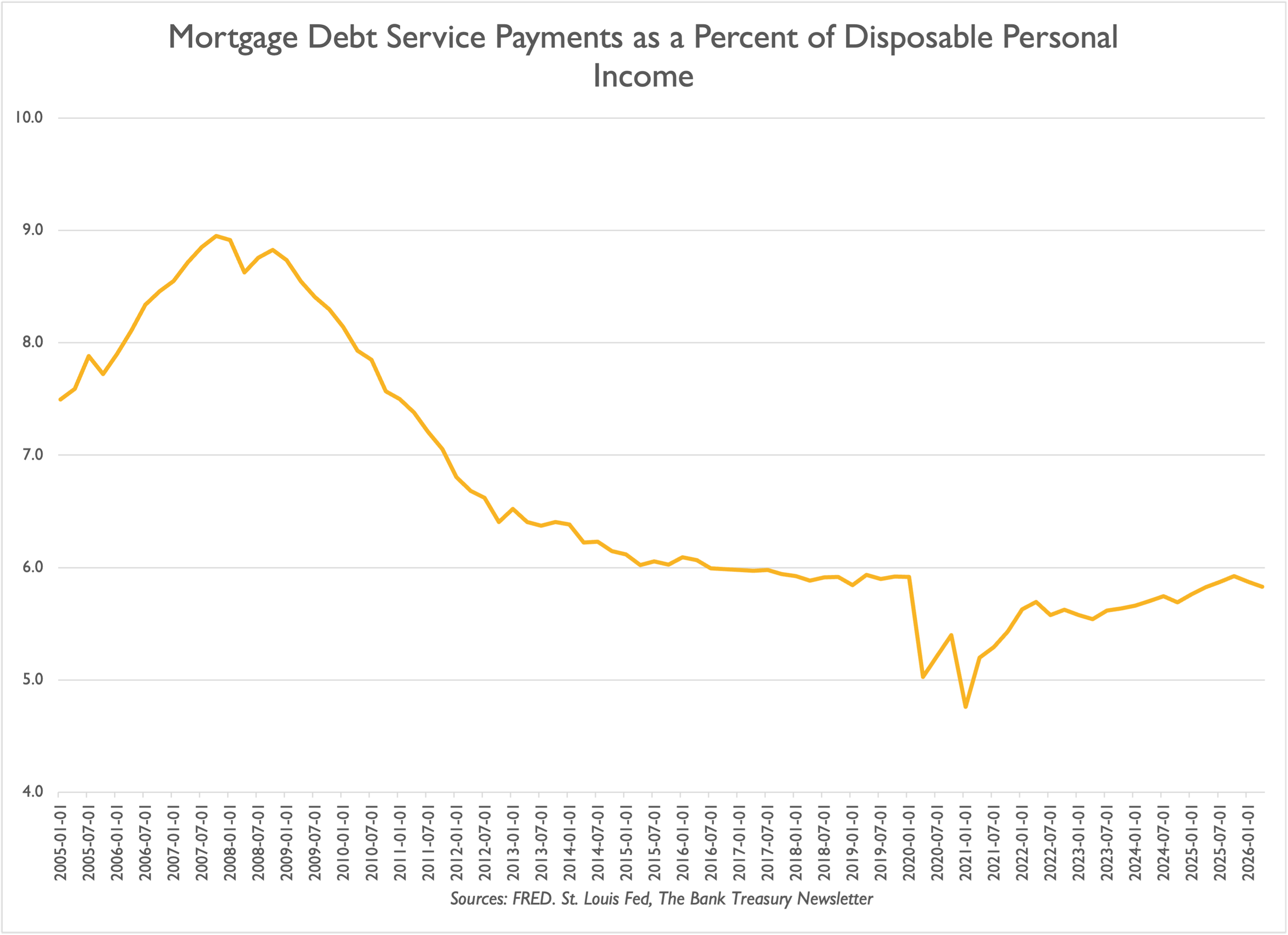
Homeowners Under No Financial Pressure To Sell Their Homes
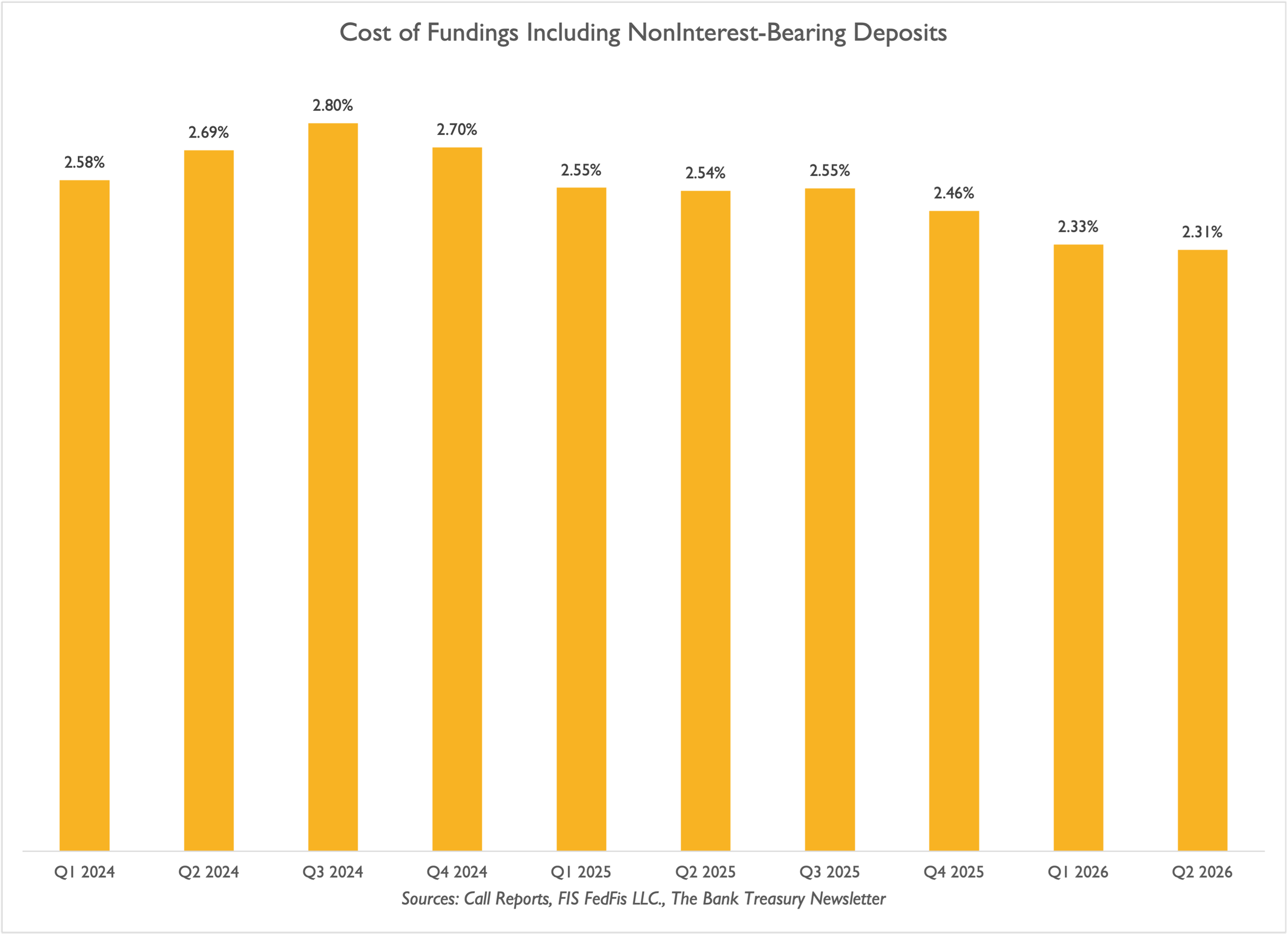
Competition May Put Upward Pressure on Cost of Funds
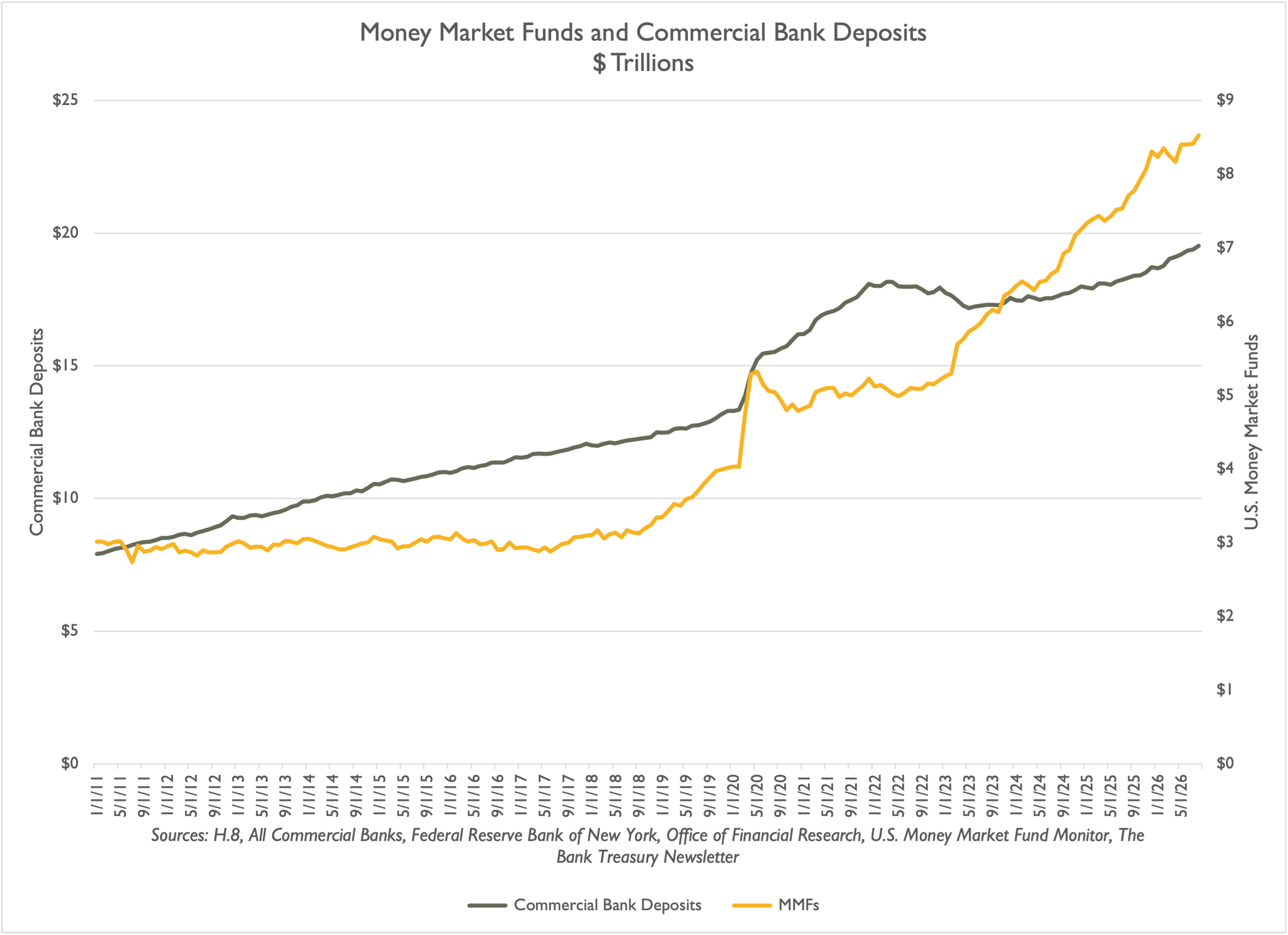
Deposits and Money Market Growing Robustly
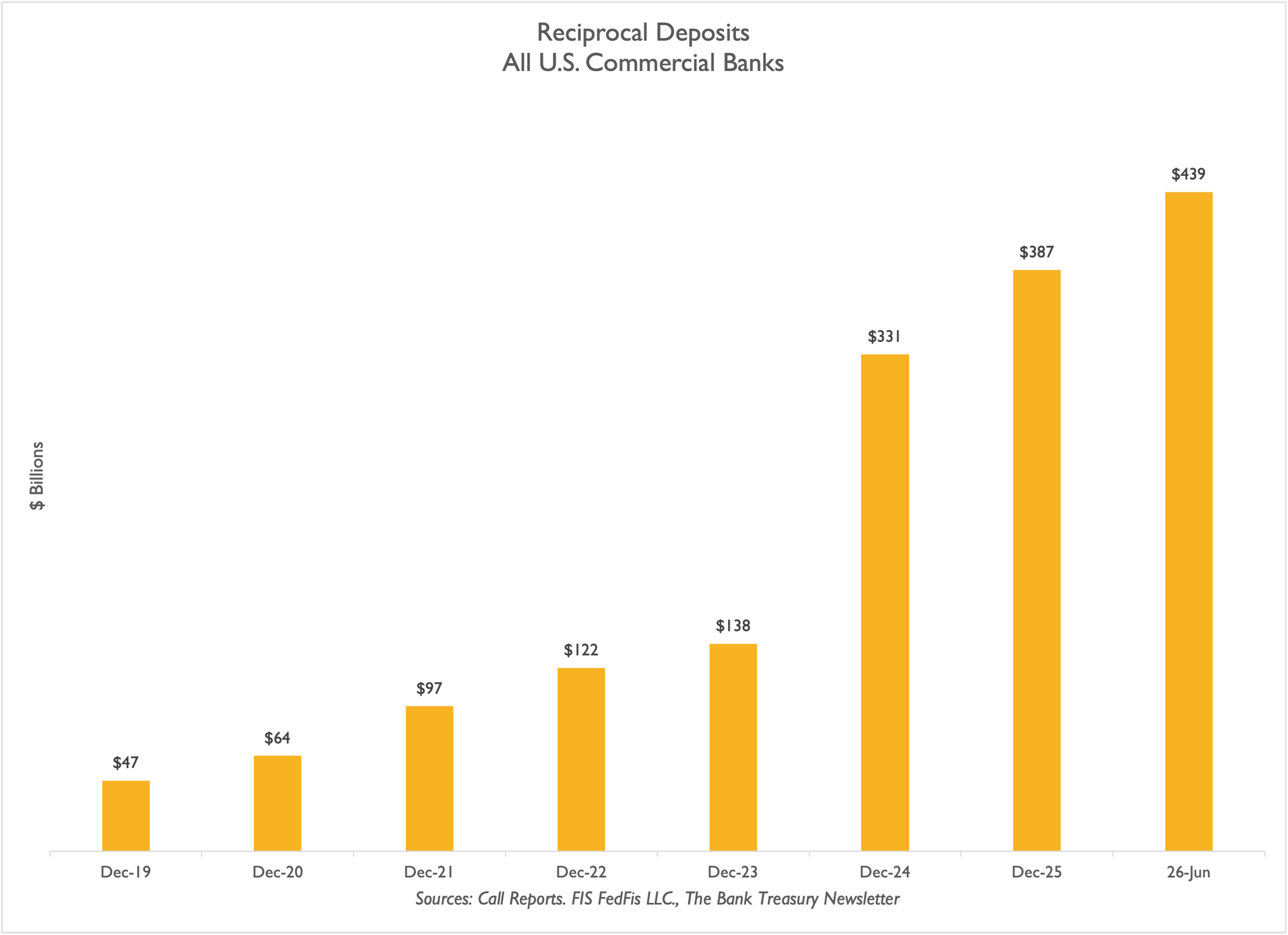
FDIC Expanded Reciprocal Deposit Capacity
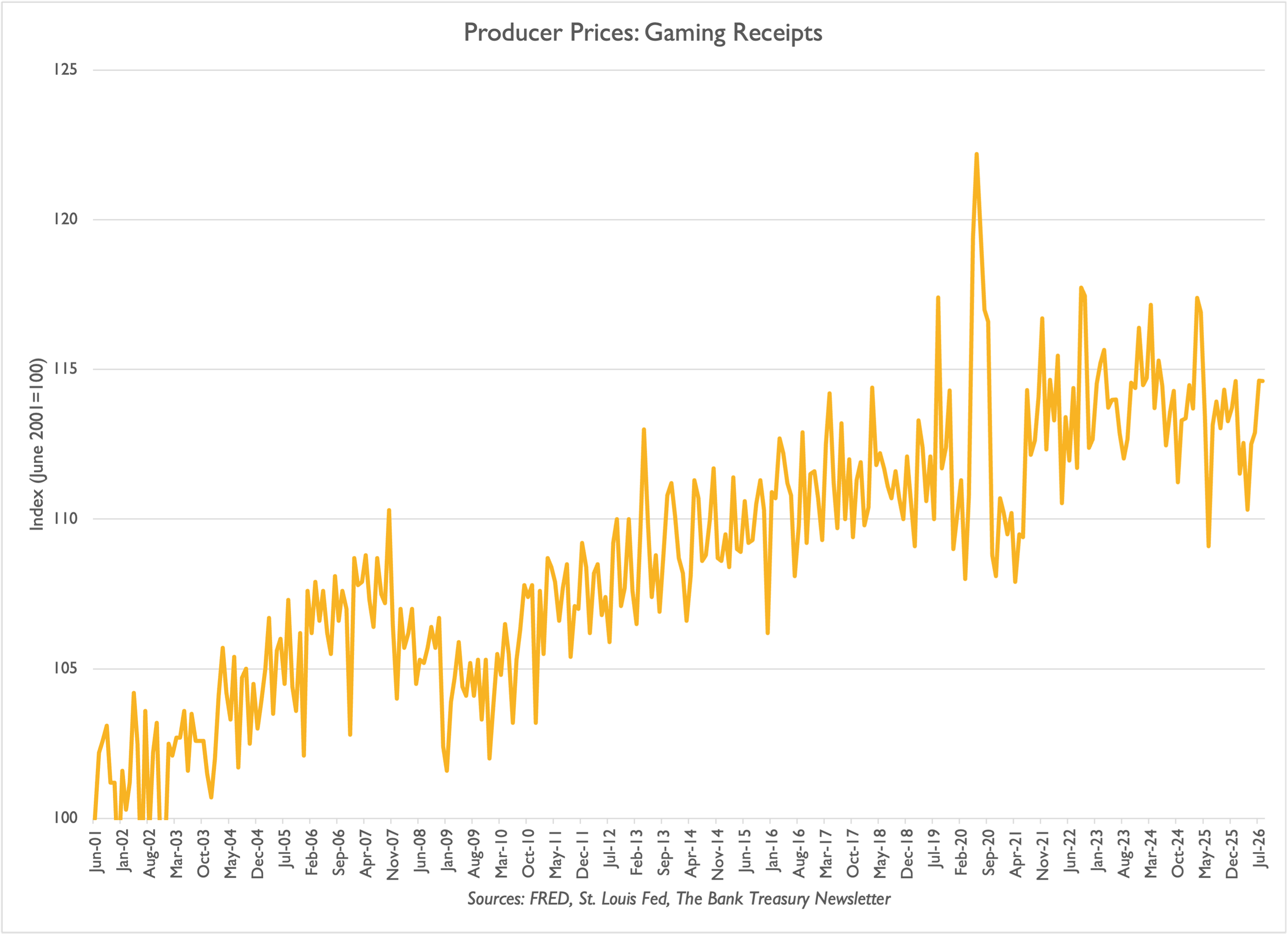
Casino Lending Is A Growth Business